The Brief
Wesgro is the official tourism, trade, and investment promotion agency for the Western Cape, South Africa. When the COVID-19 pandemic began disrupting businesses across the region, Wesgro launched the Support Business initiative – a dedicated digital resource to help South African businesses navigate the economic uncertainty created by the crisis.
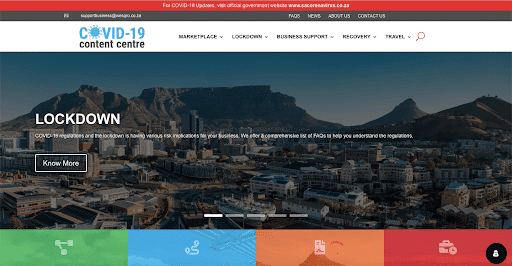
RubyWeb was engaged to design and build the Support Business website from the ground up. The brief was clear but technically ambitious: create a professional, easy-to-use platform that centralised COVID-19 guidance for business owners, provided a smart tool to help businesses find relevant funding and disaster relief, and hosted a functioning online marketplace connecting PPE buyers with registered suppliers. The project needed to move fast – businesses needed help now, not in six months.
The Challenge
The Support Business initiative was not a standard web build. It required three distinct and technically complex deliverables to function together on a single platform: an information and resource hub, a custom-built Fund Finder tool, and a full supplier marketplace for personal protective equipment. Each on its own would have been a significant project. Delivering all three simultaneously – under urgency – required disciplined planning and execution from day one.
The information landscape around COVID-19 relief was also fragmented and fast-changing. Funding programmes had different eligibility criteria, expiry dates, and application processes. A static FAQ page would not be sufficient. The tool needed to surface the right information to the right business at the right time – based on their specific profile and needs.
- No existing platform - the full website, tools, and marketplace needed to be built from scratch under time pressure
- Fragmented funding landscape - dozens of different relief programmes with varying eligibility criteria required complex data mapping to surface relevant results
- No off-the-shelf Fund Finder tool existed that met the requirements - custom development was the only viable path
- A live PPE marketplace required supplier registration, product listing, and buyer-facing browsing functionality - all in one platform
- SEO readiness was critical - the platform needed to be discoverable by business owners searching for COVID-19 relief through Google
- Content needed to be structured so that industry-specific FAQs could be indexed and found organically, increasing reach beyond direct traffic
- Partner showcasing and internal linking to external resources required clear structural planning across the site
Our Approach
We structured the project around three parallel delivery tracks: the informational website, the Fund Finder tool, and the PPE marketplace. Each track had its own technical scope, but all three needed to present as a single, coherent digital experience for the business owner arriving on the site.
Before any development began, we audited the available funding and relief data – mapping each programme’s eligibility criteria, support type, business size requirements, and Western Cape applicability. This mapping exercise was the foundation of the Fund Finder logic. On the marketplace side, we scoped the full supplier registration and product listing flow before writing a line of code, ensuring the architecture could support a growing supplier base without requiring structural rework.
Architecture & UX Decisions
The site was designed around a clear user journey – a business owner in distress should be able to land on the platform, understand what was available to them, and take a productive next step within minutes. Navigation was kept simple and purposeful. Industry-specific FAQ sections were structured as distinct, indexable content pages rather than a single catch-all FAQ, giving each section genuine SEO value and ensuring business owners in different sectors could find information relevant to their specific situation.
The Fund Finder tool was built as a custom questionnaire that filtered results dynamically based on business characteristics – sector, size, type of support needed, and other qualifying criteria. This required a complex back-end mapping of funding programme data to the criteria asked during the questioning process, ensuring only applicable results were displayed. The PPE marketplace was built with a supplier registration flow, product catalogue management, and a buyer-facing browsing interface – structured to be scalable as new suppliers joined.
The Build
The core deliverable was a fully custom WordPress platform with three functional components – an information hub, a bespoke Fund Finder tool, and a live PPE supplier marketplace. On-site technical SEO was handled by RubyWeb, with keyword research, title tag implementation, IP address redirection, and Google Analytics and Google My Business setup handled in collaboration with Ruby Digital’s SEO team. Key deliverables included:
- Full WordPress website design and development from a new build – clean architecture, SEO-friendly structure, and high-resolution imagery with optimised alt tags
- Custom Fund Finder tool built from scratch – questionnaire-based filtering logic mapping business profile data to available funding and relief programmes
- Complex data mapping of all Western Cape-relevant COVID-19 funding programmes to the Fund Finder criteria framework
- PPE marketplace with supplier registration, product listing management, and a buyer-facing browsing interface
- Industry-specific FAQ sections for each major business sector – individually indexable and discoverable through organic search
- Partner showcase section and internal resource linking structure throughout the site
- Awareness banner and contact assistance functionality for businesses needing direct support
- URL mapping, sitemap creation, and site-wide coding optimisation for performance and crawlability
- Google Analytics and Google My Business setup and configuration in collaboration with Ruby Digital
- Title tag implementation, keyword research, and IP address redirection to the primary domain
The Outcome
The Support Business platform launched as a fully operational resource for Western Cape businesses navigating the COVID-19 crisis. Business owners could land on the site, answer a short set of questions, and receive a filtered list of funding and relief programmes relevant to their specific situation – replacing hours of research with a direct, actionable result. Suppliers could register on the PPE marketplace and list their products for purchase by corporations equipping their staff and premises.
The industry-specific FAQ content was indexed by Google, giving the platform organic reach that extended well beyond direct referrals from Wesgro. The platform was subsequently integrated into Wesgro’s primary website at wesgro.co.za as the initiative matured, consolidating the resource under the main agency domain.
Gallery