The Brief
For more than 75 years, Continental Tableware has been a trusted name in South Africa’s hospitality industry – supplying restaurants, hotels, and establishments with quality tableware built on craftsmanship and consistency. But the brand was changing. A deliberate repositioning from a B2B-focused identity toward a consumer-facing brand required more than a new logo. It required a new digital foundation.
Continental Tableware approached Ruby Digital for strategic digital support. RubyWeb – as Ruby Digital’s dedicated web solutions partner – took ownership of the full web engagement, from discovery through to delivery.
Phase 1 was scoped to deliver a modern, brand-aligned website that would serve as the commercial foundation for a future eCommerce platform. The goals were clear: increase brand visibility, showcase product quality, build trust with a new consumer audience, and lay the technical groundwork for Phase 2 without creating rework down the line.
The Challenge
Repositioning a B2B brand for a consumer audience is a structural challenge, not just a creative one. The website needed to do something it had never done before – speak directly to end consumers, present 21 product categories intuitively, and build the kind of brand trust that converts a first-time visitor into a buyer.
The existing digital footprint made this harder. The brand’s online presence was fragmented across two separate domains – continentalchina.co.za and continentalonline.co.za – each carrying legacy content, URLs, and traffic that needed to be unified without losing what had been built. Migrating and consolidating two domains into a single, coherent platform while simultaneously redesigning for a new audience required careful sequencing at every stage.
Phase 2 eCommerce functionality also had to be kept firmly in view. Every architecture and platform decision in Phase 1 needed to carry that weight – meaning shortcuts that looked efficient now would create expensive rework later.
- The brand's online presence was split across two domains, creating a fragmented experience and diluting search visibility
- The existing site was built for a B2B audience and did not speak to or convert consumer buyers
- 21 product categories required a navigation and information architecture that made browsing intuitive, not overwhelming
- No clear content or visual framework existed to present the brand's heritage and quality at a consumer-facing standard
- The platform needed to be architected for future eCommerce functionality without requiring a rebuild when Phase 2 was ready
- Access to required imagery, plugin approvals, and staging credentials created coordination challenges that had to be managed carefully to keep delivery on track
Our Approach
We treated this as a brand transition project with a web delivery component – not the other way around. The question we kept returning to was what a 75-year-old craftsmanship brand needs to communicate to a consumer who has never heard of it, and how the website structure supports that from the very first page.
A dedicated project manager led delivery using our Rubix framework, coordinating across design, development, content, and client stakeholders with defined milestones and sign-off points at each stage. This was particularly important on a project where external dependencies – imagery, credentials, plugin approvals – had the potential to create timeline pressure if not managed proactively.
The platform choice was deliberate: WordPress with WooCommerce already in the framework, positioned from day one to support the Phase 2 eCommerce build without structural rework.
Architecture & UX Decisions
The information architecture was rebuilt around the consumer journey, not the product catalogue. With 21 categories to organise, the priority was a navigation structure that felt intuitive – guiding a first-time visitor through the range without overwhelming them or burying the brand story beneath a product grid.
Domain consolidation was planned and executed with redirect mapping in place before any content moved, protecting existing search visibility and ensuring that traffic arriving at either legacy domain landed in the right place on the new platform. The site was structured as a polished brochure-style experience for Phase 1, with the eCommerce architecture embedded beneath the surface – ready for Phase 2 activation without a rebuild.
Mobile responsiveness, POPIA compliance infrastructure, and content optimisation were built in from the start, not retrofitted at the end.
The Build
The core deliverable was a clean, professional, brand-aligned WordPress website – structured to present Continental Tableware’s repositioned identity effectively and built to scale into a full eCommerce platform in Phase 2.
The full scope of delivery included:
- Full website design and development within the existing WordPress and WooCommerce framework
- Consumer-focused information architecture covering 21 product categories with intuitive navigation
- Domain migration and consolidation from continentalchina.co.za and continentalonline.co.za to a single unified platform
- Redirect mapping and implementation to protect search visibility through the domain transition
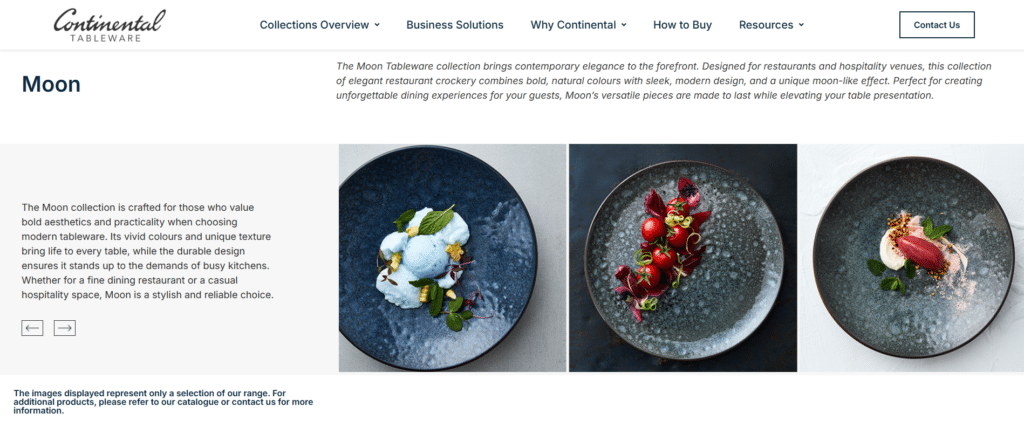
- Custom page layouts designed to reflect the brand’s repositioned consumer identity
- Mobile-first responsive build across all page types
- POPIA compliance infrastructure including consent management
- Performance optimisation, caching configuration, and technical SEO improvements
- Scalable site architecture with eCommerce functionality ready for Phase 2 activation
- Full project delivery managed via a structured Project Charter with defined milestones and client approvals at each stage
The Outcome
Continental Tableware now has a digital presence that reflects the quality of the brand and the ambition of where it is heading. Phase 1 delivered a polished, professional platform that speaks credibly to a consumer audience – and does so on a foundation built to carry the full weight of Phase 2 eCommerce without starting over.
Specific improvements include:
- A unified digital presence under a single domain, replacing a fragmented two-domain footprint that was diluting brand authority and search visibility
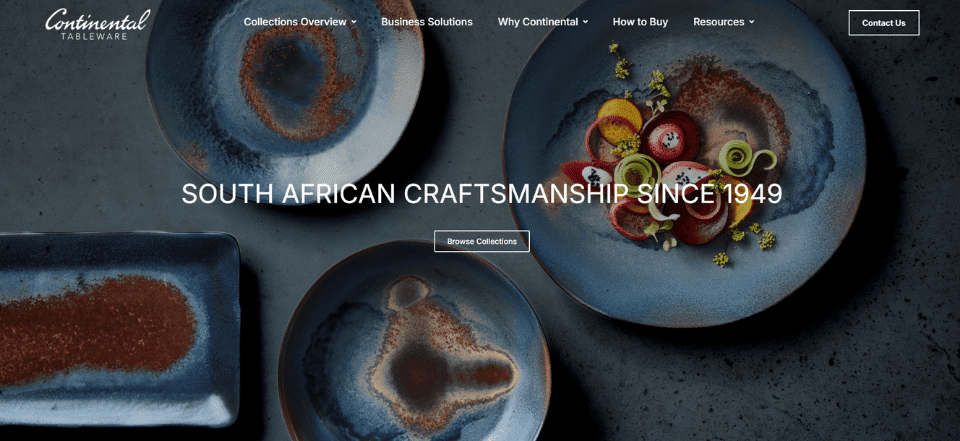
- A consumer-facing website that communicates the brand’s 75-year heritage and product quality clearly and confidently
- Intuitive navigation across 21 product categories, reducing friction for first-time visitors exploring the range
- A mobile-responsive, POPIA-compliant platform ready for an international consumer audience
- A scalable technical foundation with WooCommerce architecture in place, meaning Phase 2 eCommerce can be activated without rework
- Stronger brand positioning that supports the ongoing transition from B2B identity to consumer brand
The business now has the digital infrastructure to grow – and a platform that can grow with it.
Gallery